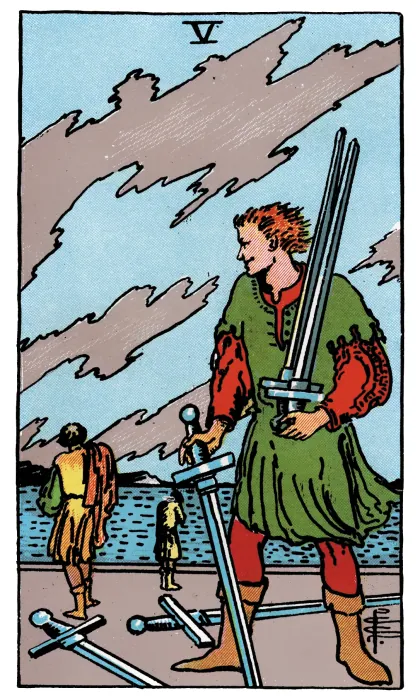
Direct expression
Upright
The Five of Swords asks what a victory costs when trust, dignity, or future cooperation is damaged in the process. Winning the immediate contest may leave the larger objective weaker.
Fives disrupt prior balance. In Swords, the disruption comes through strategy, language, and power used without a workable shared rule. The immediate question may be won while the conditions for future trust disappear.
The card does not require passive surrender. Defense, documentation, and firm boundaries may be necessary. Its warning concerns method: whether the response preserves proportionality and the ability to live with the result after adrenaline and audience attention have gone.
Practical adviceDecide whether the prize is worth the relationship and downstream cost before taking the final advantage.