The Devil Tarot Card Meaning

The Devil exposes a binding pattern and the payoff that helps maintain it. Shame can hide the mechanism, while honest attention to desire, fear, and dependency makes choice more visible.

The Devil makes constraint legible by showing both chains and appetite. The card's difficult honesty is that a harmful pattern may persist because it offers relief, identity, pleasure, or protection as well as cost.

  • attachment
  • temptation
  • control
  • shadow
  • dependency
  • materialism
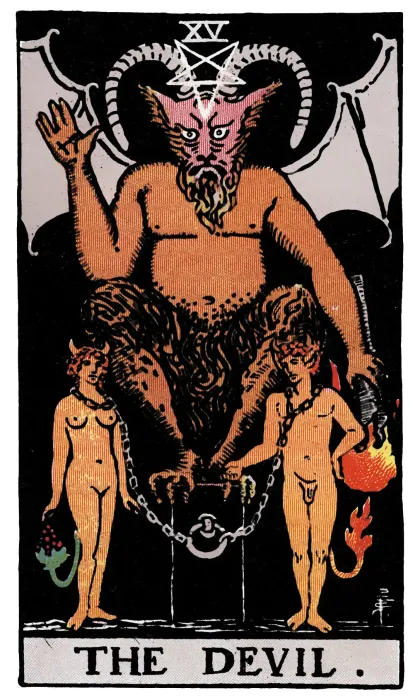
The Devil tarot card from a Rider-Waite-Smith-style deck
The Devil · Major Arcana 15 Artwork by Pamela Colman Smith (1909) · Public Domain Mark 1.0
Arcana
Major
Number
15
Upright
No
Reversed
Maybe

The Devil upright and reversed meaning

Direct expression

Upright

The Devil exposes a binding pattern and the payoff that helps maintain it. Shame can hide the mechanism, while honest attention to desire, fear, and dependency makes choice more visible.

Upright, The Devil asks what makes the pattern rewarding enough to repeat. The answer may involve pleasure, money, attention, certainty, status, or avoidance of a harder feeling. Naming the reward removes some of the pattern's secrecy.

The card is not evidence of an external evil force or a fixed character flaw. It is more useful as a map of reinforcement and constrained choice. Effective change alters access, incentives, and support, not only intention.

Practical adviceIdentify what the pattern gives you, then reduce the dependency that makes the cost feel unavoidable.
Blocked or redirected

Reversed

The Devil reversed can mark recognition, loosening attachment, or the first concrete limit placed on a pattern that previously felt inevitable.

Reversed, a person may see the chain and test whether it is as fixed as it felt. A boundary, disclosure, period of abstention, or practical exit step can restore options that shame previously hid.

Relapse or ambivalence does not mean no change occurred. It does show where the pattern still has leverage. Treat that information as design input for stronger support rather than proof of personal failure.

Practical adviceMake the first change that reduces the pattern's practical leverage rather than relying on willpower alone.

Symbols in The Devil

In the Rider-Waite-Smith image, a horned and winged figure sits above a dark pedestal beneath an inverted pentagram. A nude man and woman stand chained to the base, but the loops around their necks appear loose. Their tails end in flame and grapes, and the central figure holds one hand raised while a lowered torch points toward the man. The composition echoes The Lovers in darker form, replacing open choice with attachment and constrained awareness.

The loose chains
The visible slack suggests constraint that is real but not fully explained by physical force alone.
The inverted pentagram
The reversed emblem places material appetite and domination above an integrated human order.
The flame and grape tails
The paired tails connect appetite, pleasure, and impulse with the attachments being maintained.
The dark pedestal
The elevated central figure makes the hierarchy and the couple's participation in it impossible to ignore.

Love, career, money, feelings, and yes-or-no meanings

Love & relationships

Love · upright

In love, this card may describe intense attraction, jealousy, control, secrecy, or a bond reinforced by fear of being alone. It does not make desire inherently harmful. The concern is whether either person can say no, set a limit, and remain a full participant without punishment or manipulation.

Reversed

In a relationship, a controlling or compulsive pattern may be becoming visible enough to interrupt. This can support leaving, renegotiating, or restoring consent, but awareness is only the beginning. Safety, support, and repeated boundaries matter more than a dramatic promise that the cycle is over.

Try a three-card love tarot reading

Work & direction

Career · upright

At work, The Devil can point to golden handcuffs, exploitative incentives, status dependency, or a habit of accepting harmful terms for a short-term reward. Name the payoff as clearly as the cost. A realistic exit or renegotiation plan is stronger than moralizing the attachment while continuing to rely on it.

Reversed

At work, a person may be ready to leave an exploitative arrangement, disclose a hidden cost, or stop tying identity to status and reward. The reversal can also show denial disguised as freedom. Define the material steps that reduce dependence, including savings, documentation, allies, and a timeline.

Draw one card for practical guidance

Emotional perspective

As feelings · upright

The Devil can indicate strong sexual attraction, obsession, possessiveness, fear of loss, or a connection used to meet an unmet need. Intensity should be evaluated alongside consent and freedom.

Reversed

They may be detaching from compulsion, recognizing an unhealthy bond, or resisting a familiar temptation. Someone can still feel desire while deciding not to organize their behavior around it.

Resources & exchange

Money · upright

For money, The Devil can flag debt, exploitative terms, compulsive spending, status consumption, or income that feels impossible to leave. Map the exact dependency and hidden fees before choosing a remedy.

Reversed

Reversed, repayment, renegotiation, cancellation, or a change in spending access may begin to loosen the bind. Build structural limits and seek qualified support where debt or contracts carry serious stakes.

Directional shorthand

Yes or No Direction

UprightNo

Usually no when the choice increases dependency, hides its real cost, or relies on pressure that limits informed consent.

ReversedMaybe

Maybe when the question concerns leaving or reducing a harmful attachment and a concrete support structure is being put in place.

“Why do I keep returning to a situation I know is unhealthy for me?”

Interpretation

Identify the reward the pattern still provides—attention, relief, status, certainty, or avoidance. A practical exit must replace that reward, not merely condemn it.

The Devil in a past, present, future spread

01

Past

An attachment, fear, or unequal power dynamic established the pattern.

02

Present

The binding incentive needs to be named without denial or shame.

03

Future

More choice becomes available when secrecy is reduced and the practical chain is addressed.

Want to see these positions with cards of your own? Try a Past–Present–Future tarot reading.