Three of Swords Tarot Card Meaning

The Three of Swords names emotional pain that thought can no longer keep abstract. A difficult truth, separation, or injury needs accurate acknowledgement before repair or release can begin.

The Three of Swords is pain made unmistakable. Its stark image prevents premature consolation while separating a known wound from the extra story fear may build around it.

  • heartbreak
  • painful truth
  • grief
  • separation
  • sorrow
  • necessary acknowledgement
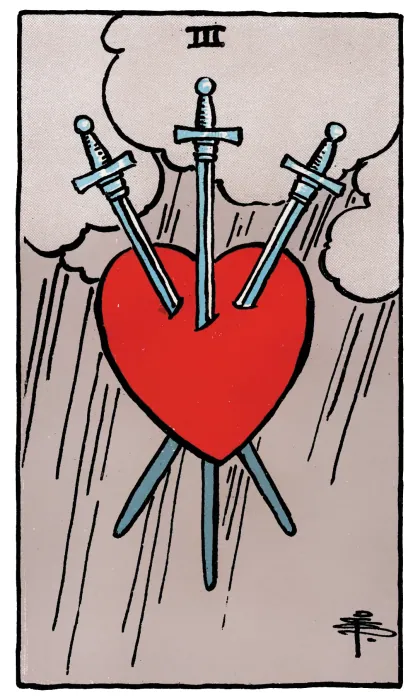
Three of Swords tarot card from a Rider-Waite-Smith-style deck
Three of Swords · Swords suit Artwork by Pamela Colman Smith (1909) · Public Domain Mark 1.0
Number
3
Upright
No
Reversed
Maybe

Three of Swords upright and reversed meaning

Direct expression

Upright

The Three of Swords names emotional pain that thought can no longer keep abstract. A difficult truth, separation, or injury needs accurate acknowledgement before repair or release can begin.

Threes develop and express; in Swords, what was thought or said enters the emotional body. The event may be clear while motive remains uncertain. Keep those categories separate, because pain can increase the pressure to explain another person's private intention without evidence.

The card supports grief that has a container: trusted people, time away, documentation, counseling, or another form of appropriate care. It should not be used to predict inevitable suffering or to keep someone focused on injury after they are ready to move.

Practical adviceAcknowledge the wound without embellishing it, seek appropriate support, and postpone major conclusions until the first intensity has passed.
Blocked or redirected

Reversed

Reversed, pain may be moving toward integration or remaining trapped through denial, repeated rumination, and pressure to forgive before trust has been repaired.

Reversal can show the swords beginning to withdraw. The scar does not erase the event; it records what should be remembered about boundaries, compatibility, or risk. Integration means the memory informs present choices without controlling every new situation.

If pain is denied, it may emerge through irritability, numbness, or repeated attempts to obtain an apology. Name what repair can and cannot accomplish. Some endings become healthier when closure is built internally rather than waiting for the person who caused the injury to supply it.

Practical adviceLet healing change access, expectations, and behavior; do not measure it by whether the event can be discussed without feeling.

Symbols in Three of Swords

The Rider-Waite-Smith card contains no human figure. A large red heart floats against a gray sky and is pierced by three metal swords, one vertical and two crossing diagonally. Heavy clouds fill the background, and straight rain falls across the entire scene. The image is stripped of landscape and narrative detail, concentrating attention on the relationship between thought, language, and emotional injury without specifying who caused it.

The red heart
A single exposed organ makes emotional vulnerability and injury immediate rather than symbolic at a distance.
Three piercing swords
Blades connect words, thoughts, and decisions with a wound that has entered lived feeling.
The gray clouds
The entire background is obscured, reflecting how pain can narrow the visible field.
The falling rain
Continuous rain sustains the atmosphere of grief while also suggesting movement rather than a frozen scene.

Love, career, money, feelings, and yes-or-no meanings

Love & relationships

Love · upright

This card can accompany heartbreak, rejection, betrayal, grief, or words that changed the relationship. It does not automatically prove infidelity or a third party. Name the event that is known, protect immediate safety and support, and avoid turning unanswered questions into additional facts.

Reversed

A person may be ready to release resentment, speak about an injury, or accept an ending. The reversal can also show pain minimized because conflict feels inconvenient. Reconciliation requires changed behavior and consent; forgiveness does not require renewed access.

Try a three-card love tarot reading

Work & direction

Career · upright

A rejection, conflict, termination, or painful feedback may have personal impact even when framed as business. Separate the valid information from humiliation and seek the record when process matters. Recovery improves when the event is described specifically rather than converted into a verdict on all future ability.

Reversed

A difficult professional event may be losing its power, especially when lessons and boundaries have been made concrete. If the wound keeps returning, examine unresolved process, reputation, or financial consequences rather than demanding emotional closure alone.

Draw one card for practical guidance

Emotional perspective

As feelings · upright

the Three of Swords suggests hurt, grief, disappointment, or fear of further injury. Someone may still love the person connected with the pain. Remaining feeling does not cancel the boundary or imply that reconciliation is desired.

Reversed

They may be softening, processing, or held under a controlled surface. A person can forgive and still choose distance. Look for reduced reactivity and clearer boundaries rather than assuming healing must restore closeness.

Resources & exchange

Money · upright

The card can reflect a painful loss, separation of shared assets, rejected application, or expense tied to a rupture. Confirm the facts and obtain professional advice where legal or financial rights are involved. Emotional urgency can make unfavorable terms harder to see.

Reversed

Reversed, the financial consequences of a loss may be stabilizing through settlement, repayment, or a revised plan. The shadow is avoiding the numbers because they reopen the event. Break the review into small steps and preserve all relevant records.

Directional shorthand

Yes or No Direction

UprightNo

Usually no under current conditions because a known hurt, separation, or painful truth materially changes the decision.

ReversedMaybe

Maybe after the injury has been acknowledged and behavior has changed; healing alone does not prove that the prior arrangement should resume.

“How should I respond to a painful rejection?”

Interpretation

Allow the disappointment to be specific. Do not negotiate with the rejection or use it to judge your whole worth; reduce contact if needed and rebuild around what remains true.

Three of Swords in a past, present, future spread

01

Past

An earlier loss or painful conversation still shapes the question.

02

Present

A difficult truth must be felt and named without exaggeration.

03

Future

Healing becomes possible after the wound is acknowledged and protected.

Want to see these positions with cards of your own? Try a Past–Present–Future tarot reading.